

Archives

  • Vol. 5 No. 1 (2026)

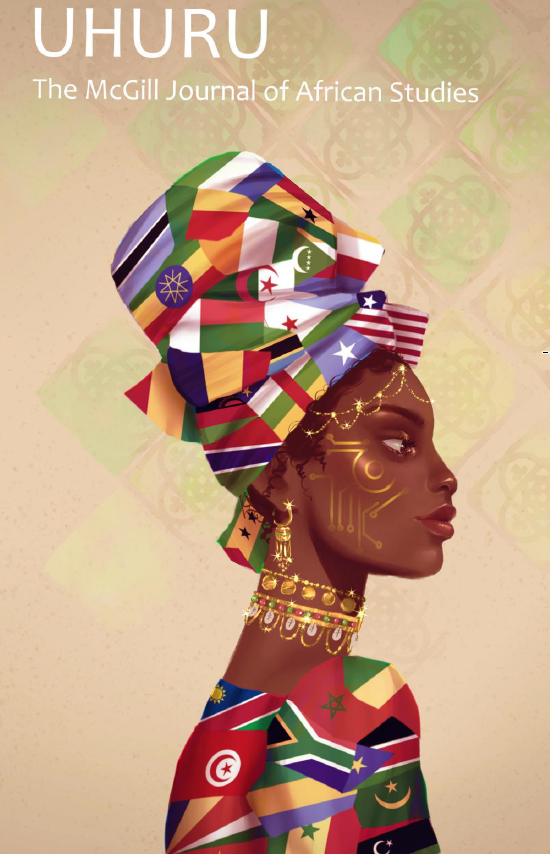
    Afrofuturism invites contributors to imagine the futures that emerge when African diasporic resilience, ingenuity, and hope converge. Across the continent and its global diasporas, Black and African communities have always been future-makers, dreaming and innovating to create worlds where liberation is not deferred, but lived. This volume asks: what does it mean to build futures on our own terms? How can our unique knowledge, art, technology, and youth movements shape the horizons we are reaching toward? It calls upon decolonial imagination to challenge who gets to define progress, innovation, and sustainability, and insists that African people are at the helm of their own realities. Africa is not a continent waiting to be developed; it is at the forefront of technological advancement, economic projection, and cultural transformation.

  • Vol. 4 (2025)

    For too long, Africa has been confined to a single story; a narrow, incomplete narrative that overlooks its vast histories, thriving cultures, and boundless ingenuity. UHURU seeks to dismantle this one-dimensional lens by amplifying student voices that bring depth, nuance, and authenticity to the conversation. Inspired by Chimamanda Ngozi Adichie’s The Danger of a Single Story, this volume is a tapestry of perspectives, woven with scholarship, storytelling, and creative expression, that illuminate the lived experiences of African and Afro-diasporic communities. Whether through academic papers, poetry, or visual art, this edition reclaims the right to define, to question, and to reimagine. Through these pages, we invite readers to journey beyond misconceptions and discover the richness, resilience, and global impact of Africa’s diverse realities. 

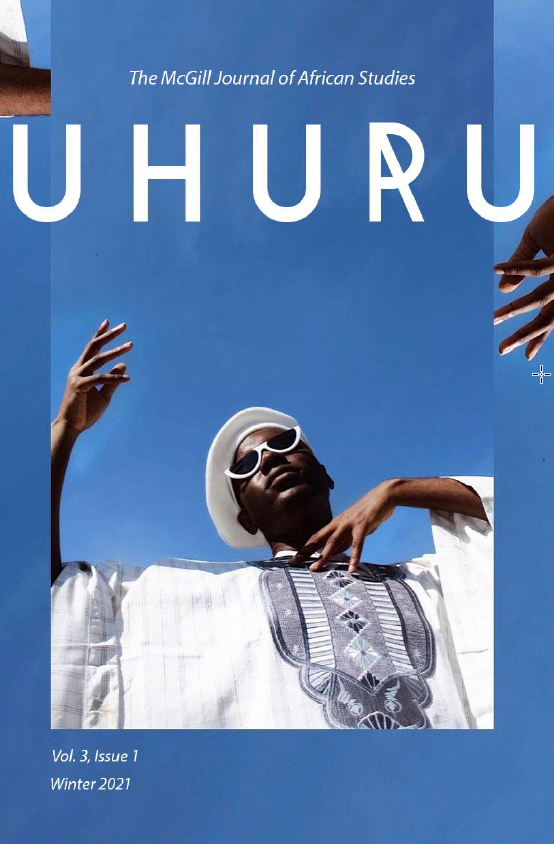
  • Vol. 3 (2021)

    UHURU, now in its third volume, is one of the very first undergraduate journals of its kind. In the following pages readers will be treated to, and rewarded with, peer reviewed articles on a wide range of topics. Indeed, UHURU speaks poignantly to advancements in the scholarship on Africa in ways that would have defied expectations only a few years ago. A product of the tireless efforts of its editorial team, the Journal takes seriously issues associated with the historical (mis)representation of Africa, the importance of working towards decolonizing scholarship on the continent, the vital importance of including (and centering) research produced by student authors from Africa and those of African descent, and the encouragement of any and all contributions that address African topics from a critical analytical lens.

  • Vol 1-2
    2020

    UHURU is dedicated to all Africans in love with their continent, to the African diaspora seeking to understand the inextricable threads of their identity, to those willing to learn more, and to the Mother continent that we all cherish. In 2020, Africans continue to build the threads that weave the beauty of the multifaceted continent. In 2020, Africa, riddled with legacies of a heavy past (still affecting contemporary societies), is this journal’s focus as a reminder that freedom still needs restoration. In 2020, students continually pave the way to a truer understanding of Africa. UHURU, freedom in Swahili, reminds us that the future is played out in the mind and that the words we attribute give meaning to them, and that producing decolonized and nuanced knowledge is a key to educating and recognizing Africa's beauty and its challenges. In this edition (themed Africa Now), we emphasize that the key to liberty, the essence of being able to rethink Africa and its issues, is knowledge.